

Artificial Intelligence (AI) is revolutionizing the agricultural sector, offering innovative solutions to traditional farming challenges. By integrating AI technologies, agriculture is becoming more efficient, sustainable, and productive. Here’s how AI is transforming farming:
Precision Agriculture
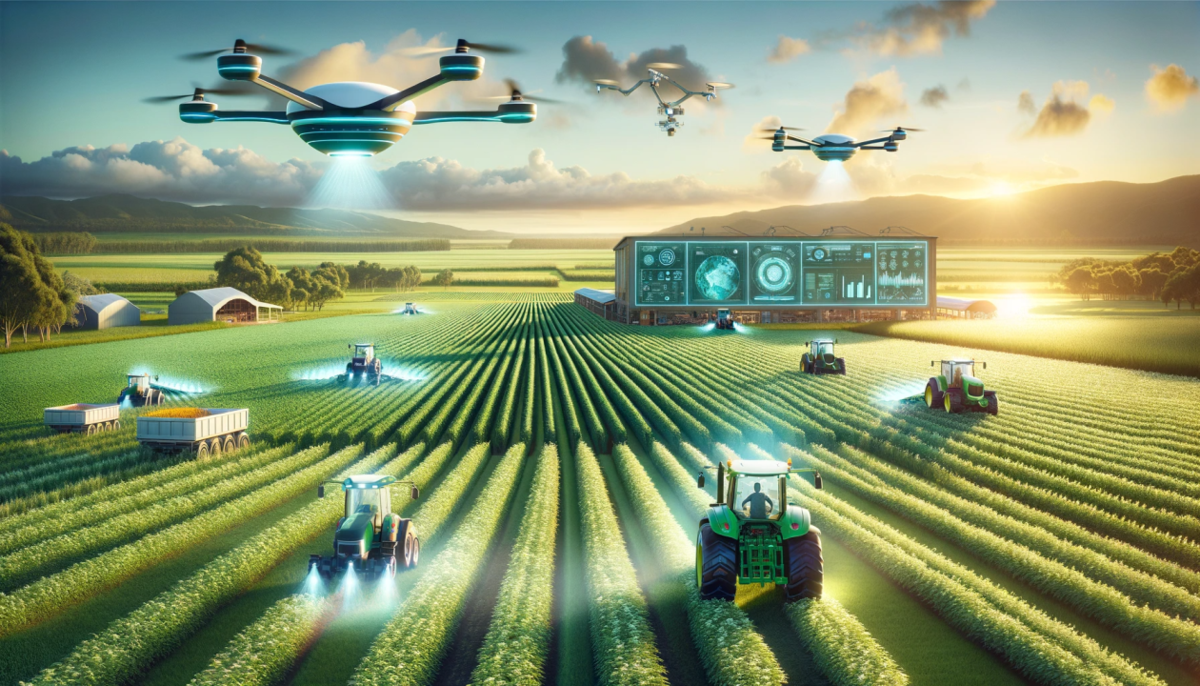
Enhanced Crop Monitoring: AI-powered drones and satellites provide high-resolution images and real-time data, enabling farmers to monitor crop health, soil conditions, and water usage more accurately. Machine learning algorithms analyze this data to detect diseases, pests, and nutrient deficiencies early, allowing for timely interventions.
Optimized Irrigation: AI systems use data from sensors placed in fields to monitor soil moisture levels and weather conditions. This information helps in optimizing irrigation schedules, ensuring crops receive the right amount of water at the right time, reducing water waste and improving crop yields.
Smart Farming Equipment
Autonomous Machinery: Self-driving tractors and harvesters equipped with AI can perform tasks such as planting, weeding, and harvesting with high precision. These machines can operate 24/7, increasing efficiency and reducing the reliance on manual labor.
Robotic Harvesting: AI-driven robots are used to pick fruits and vegetables. These robots are programmed to identify ripe produce and handle it delicately to prevent damage. This technology increases harvesting speed and reduces labor costs.
Data-Driven Decision Making
Predictive Analytics: AI uses historical data and real-time information to predict crop yields, weather patterns, and pest outbreaks. Farmers can use these insights to make informed decisions about planting, fertilizing, and harvesting, enhancing productivity and profitability.
Supply Chain Optimization: AI helps streamline the agricultural supply chain by predicting demand, optimizing inventory levels, and improving logistics. This ensures that produce reaches markets fresher and reduces food waste.
Sustainable Farming Practices
Precision Fertilization: AI systems determine the exact amount of fertilizers needed for different parts of a field, reducing chemical use and minimizing environmental impact. This practice, known as variable rate application, ensures that nutrients are efficiently utilized by crops.
Integrated Pest Management: AI technologies monitor pest populations and predict outbreaks, enabling farmers to apply pesticides more selectively and effectively. This reduces the overuse of chemicals and promotes a healthier ecosystem.
Challenges and Future Prospects
Data Integration: One of the main challenges is integrating data from various sources such as sensors, drones, and satellites. Ensuring compatibility and coherence of data sets is essential for accurate analysis and decision-making.
Adoption and Training: Farmers need to be trained to use AI technologies effectively. Bridging the gap between traditional farming practices and modern technology requires education and support.
Cost: Initial investment in AI technology can be high. However, the long-term benefits in terms of increased efficiency and productivity can offset these costs.
Regulation and Policy: Developing regulatory frameworks that ensure the ethical use of AI in agriculture is crucial. Policies should promote innovation while protecting farmers' interests and the environment.
Conclusion
AI is transforming agriculture by making farming practices more efficient, sustainable, and productive. From precision agriculture to smart farming equipment and data-driven decision-making, AI offers numerous opportunities to enhance the agricultural sector. While there are challenges to overcome, the potential benefits make AI a promising tool for the future of farming. As technology continues to evolve, AI will play an increasingly vital role in meeting the global food demand and promoting sustainable agriculture.


